CRISP
One sharp snap
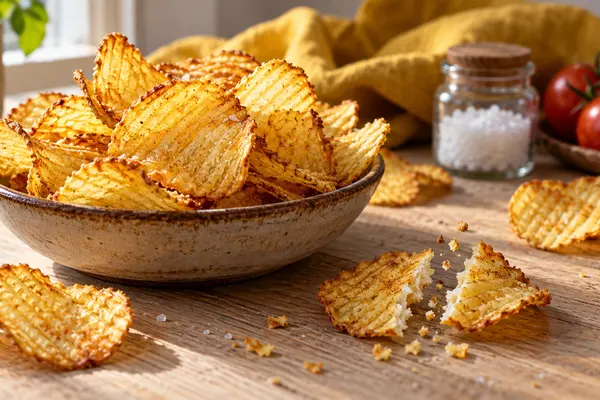
A crisp gives a single clean, high-pitched crack, with lots of sound energy above 5 kHz.
See the experiment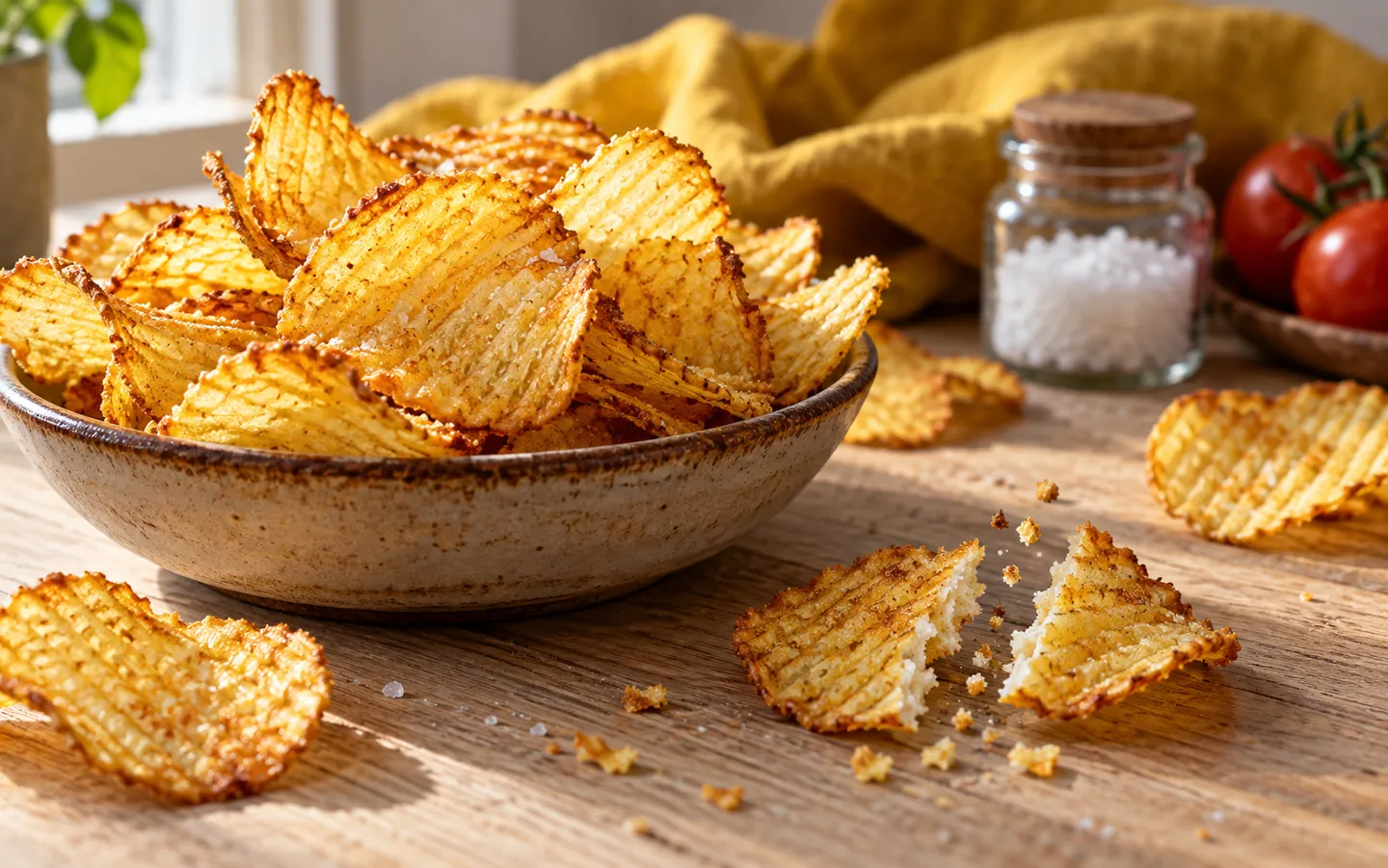
 doodlecrunch
THE SCIENCE OF CRISP
SNAP listen closely
You hear freshness as much as you feel it.
Turn up the high-pitched part of a crisp's snap and the same crisp seems fresher. Turn it down and it seems stale. Here is what food and sound research says about crisp, crunchy and soggy, in plain English.
Plain English, with the sources linked.
Updated
Try the crunch checkTHE SHORT ANSWER
Crispness tracks loudness more closely
than it tracks hardness.
CRISP
A crisp gives a single clean, high-pitched crack, with lots of sound energy above 5 kHz.
See the experimentCRUNCHY
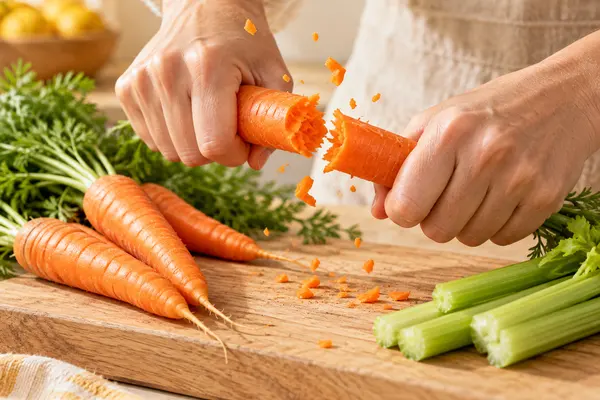
A raw carrot gives a series of lower-pitched breaks, with much of its energy around 1 to 2 kHz.
Crisp vs crunchySOGGY
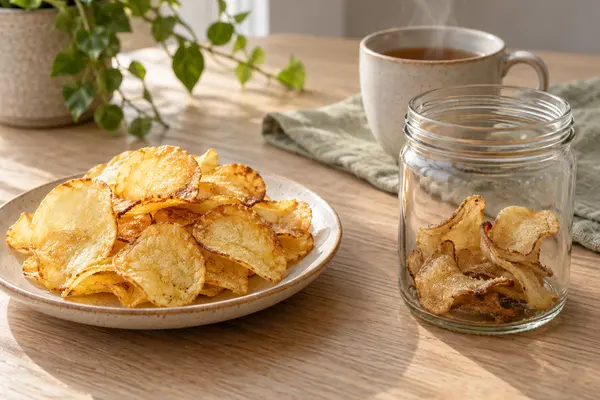
Moisture from the air makes the structure bend instead of snap, so it goes quiet and soft.
Keep it crispA QUICK CRUNCH CHECK
Pick a bite. The meter shows roughly how crisp it is likely to sound and seem, based on the studies linked below.
This is an illustration of published findings, not a measurement. Real foods vary from piece to piece.
TWO STUDIES WORTH KNOWING
The sound reaching your ears shapes
what your mouth reports.
2–20 kHz
Same crisps, different sound
At the University of Oxford, people bit crisps while hearing their own bite through headphones. When the overall sound was louder, or just the 2 to 20 kHz part was boosted, they rated the crisps both crisper and fresher. Turning it down by 20 or 40 decibels had the opposite effect.
THE CRISP TEST · 2004
Loud > firm
20 tasters, 16 foods
A University of Minnesota study found crispness was very closely related to how loud a food sounded, and less closely to how firm it was. Of the words tested, loud, snap and crackly matched crispness best.
WHAT CRISP MEANS · 1980
Both results point the same way: much of what we call texture is heard. That is why a soft, quiet crisp tells you it is past its best before you have really tasted it.
KEEP IT CRISP
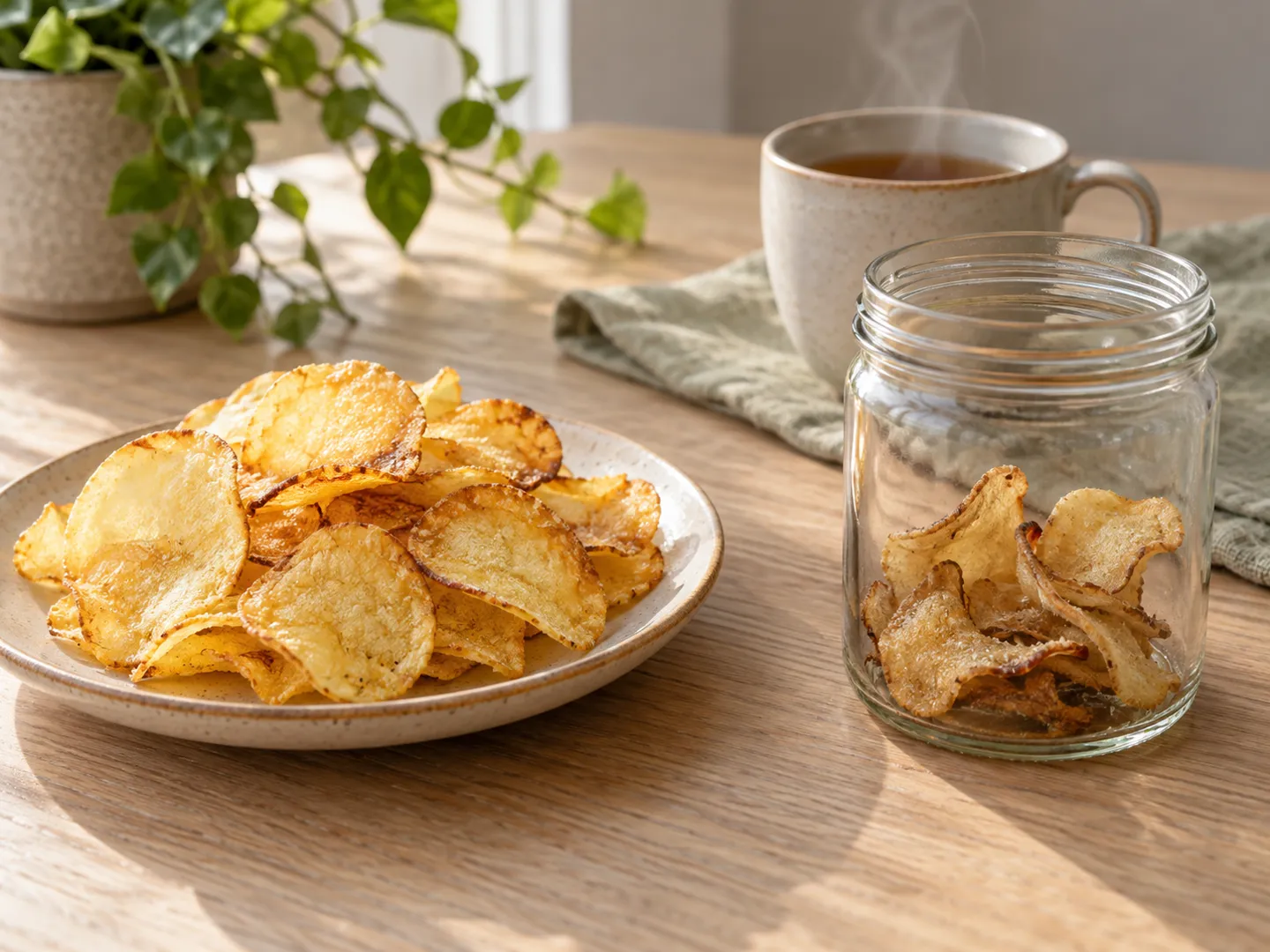
Crisps soften by taking up water from the air. Fold and clip an open bag, or tip the rest into an airtight tin or jar with a lid.
A kettle, dishwasher or simmering pan makes the air around it damp. Store crunchy snacks somewhere cool and dry instead.
Croutons, crackers and toasted seeds take up moisture from wet food. Add them just before eating so they keep their snap.
If a snack sounds dull, it will probably feel stale too. A quiet bite is a fair sign it has taken on water.
CRUNCH FACTS
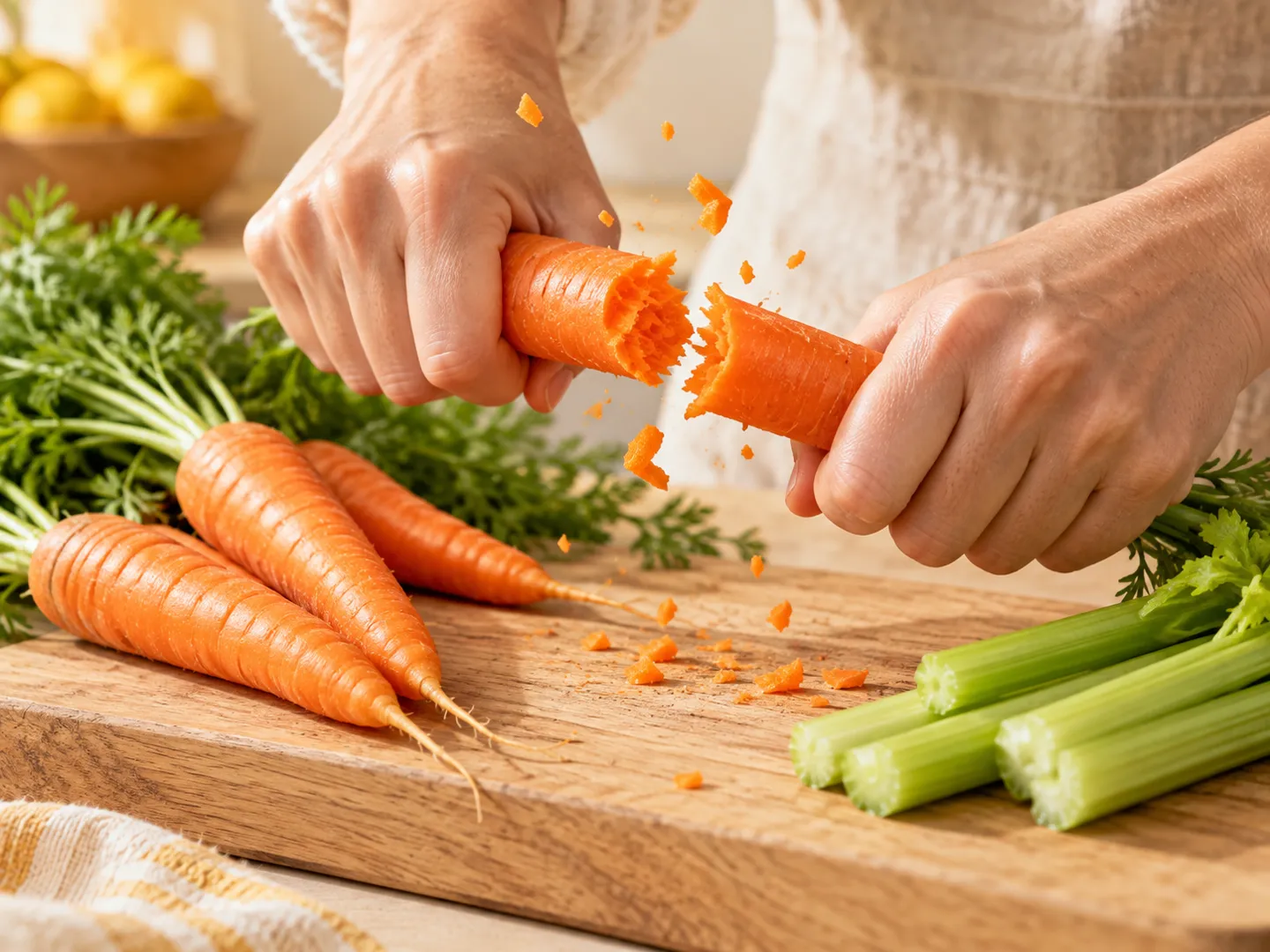
Crispy foods tend to give off lots of high-frequency sound above 5 kHz. A raw carrot, by contrast, puts lots of its acoustic energy in the 1 to 2 kHz range.
Researchers describe crispness as one sharp, clean, fast, high-pitched sound event, and crunchiness as multiple lower-pitched sounds perceived as a series of small events.
In the 2004 study, participants bit into 180 crisps in about an hour. Three quarters thought the crisps came from different packs, though only the sound had changed.
In a 2009 study, people began to notice a loss of crispness at a water activity of 0.48, and crispness was gone by 0.75. Water activity runs from 0 (bone dry) to 1 (pure water).
As crispy food breaks down and is moistened in the mouth, the sound it makes gets quieter. The crunch is loudest while the food is still dry and whole.
QUICK QUESTIONS
Short answers to the questions people ask most.
In food science, a crisp sound is a single sharp, clean, fast and high-pitched sound event, like the snap of a fresh crisp. Crispy foods tend to give off lots of sound above 5 kHz, and a 1980 University of Minnesota study found crispness was very closely related to how loud a food sounded, with loud, snap and crackly the words that matched it best.
It changes how it feels in the mouth. In a 2004 University of Oxford study, the same potato crisps were rated crisper and fresher when the biting sound played back through headphones was made louder, or when only its high-pitched part (2 to 20 kHz) was boosted.
Food scientists describe crispness as one sharp, clean, high-pitched sound, and crunchiness as several lower-pitched sounds heard as a series of small breaks. A crisp snaps; a raw carrot crunches.
They take up water from the air. Water softens the brittle structure so it bends instead of snapping. In one study, people started to notice a loss of crispness at a water activity of 0.48 and it was gone completely by 0.75.
Mostly not. Participants bit into 180 crisps in about an hour, and three quarters of them thought the crisps had come from different packs, when the only thing that changed was the sound in their headphones.
Yes, though it also raised a smile: the crisp-sound study earned Charles Spence and Massimiliano Zampini an Ig Nobel Prize in 2008, an award for research that first makes people laugh and then makes them think.
Sources
A NAME WITH BITE
doodlecrunch.com is part of the DoodleSale portfolio. It isn't in an auction right now, but you can ask about leasing it.